I don’t mind being called a dimwitted pinhead with the IQ of a rock because of my ideas, concepts, opinions, or research results for three reasons:
- I know I don’t have all the answers
- I know I don’t pretend to have all the answers
- I know when I am legitimately challenged, my ideas, concepts, opinions, and research results will be better for it.
In short, I don’t have to be right, but I do have to get it right!
Based on an incident with a McKinsey LinkedIn post a few months ago, when they removed their post after I had asked a good question and was building an insightful discussion stream with people like David Loseby and Michael Lamoureaux, I kicked myself for not taking a screenshot of said post.
Earlier today, I commented honestly and fairly on the subject matter of a post by Gartner. Published the previous day, there was zero activity, e.g., no Likes or Comments when I shared my thoughts. Shortly after that, someone else added a comment. Then, I discovered the person who posted the piece blocked me so that I could no longer access the discussion stream I started. Meanwhile, the other person who had commented checked out the post and noted that it was still up, but all comments had been removed.
Unlike the McKinsey post, I took a screenshot of the original post by the Gartner representative, which I will share with you below. By the way, I removed the name of the individual who blocked me and removed the comments.

Here is my question: why censor someone who disagrees with you? Why block someone who, based on experience and expertise, questions the validity of your post’s message?
Wouldn’t it be better to join the conversation and explain why you disagree with someone’s position?
As I said, after 40-plus years in high-tech and procurement, I have learned that no one is above correction or has cornered the market on insights. Everyone gains something through open, honest, and respectful dialogue.
Do you agree or disagree?
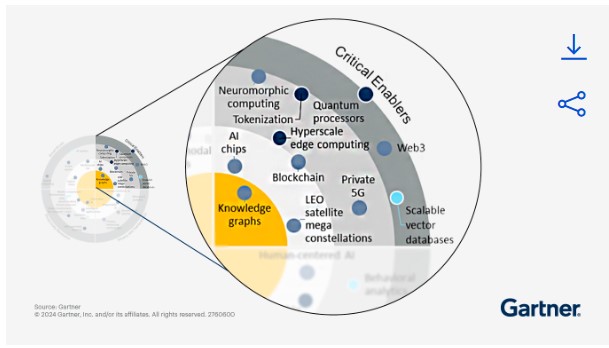
The above is the Gartner graphic I critiqued.
Here are two examples of why the above graphic’s value is questionable – specifically citing each point as a “Critical Enabler.”
Web 3.0 – Here is an excerpt from a post I wrote in 2008:
“With Web 2.0, and certainly with the semantic-centric Web 3.0 and even (although to a much lesser degree) Web 4.0, transparency, or the integrity of information and intent is essential to ensure both the ongoing veracity and viability of Social Networks (or media).”
Hyperscale Edge Computing – Here is the excerpt from a 2018 article from an interview I did with then HPE Canada VP & General Manager John Dathan:
“As one of the featured keynote speakers at Long View’s ActivateDigital2018 conference in February, I will be talking about the specific forms the HPE IoT vision takes, including how HPE’s TurnKey IoT Proof of Concept (PoC) is helping organizations to move autonomy to the edge and deploy robust solutions across multiple industries.”
I can go through these other graphic points in greater detail if need be; however, how do regurgitating ideas on concepts from 2008 and 2018 count as breakthrough insights that need to be on our radar in 2024? How is this even original thinking or content?
30


 Procurement Insights
October 26th, 2024 → 6:09 am
[…] HBR: Some estimates place the failure rate as high as […]