August 23, 2025 1:46 pm
The 2007 blog post from Procurement Insights critiques the “change management myth” in e-procurement implementations, arguing that many failures stem not from resistance to change itself but from deeper systemic issues in how technology is deployed. It draws on insights from a commenter named Chris, based on over a decade of public sector experience, to outline four key reasons why automated procurement systems often fall short, leading to poor adoption and outcomes.
The four points are:
These points highlight that true change requires addressing human, process, and systemic factors beyond just installing software.
The August 2025 LinkedIn post by Shaun Syvertsen titled “Building Rio Procurement’s First Digital Team Member” reframes “change resistance” in procurement and supply chain initiatives as valuable “rich data” rather than a barrier. Key ideas include: resistance signals that people care and have insights from lived experience; instead of pushing through it, leaders should use it as feedback to refine design, timing, and communication; validate emotions and tie changes to a clear “why” for better adoption; and real change happens through people, not just processes. Syvertsen references a discussion with change management expert Sarah L. Manley Robertson to emphasize these themes. The post directly ties to ConvergentIS’s Rio, positioning it as an AI-driven tool that embodies this people-focused approach to digital transformation.
The 2025 post directly relates to the 2007 article by challenging the “change management myth” through a modern, human-centered lens. The earlier piece identifies why e-procurement efforts fail—often blaming “resistance” while ignoring root causes like inadequate training, poor system fit, and unfulfilled promises—which aligns with Syvertsen’s view that resistance isn’t opposition but insightful feedback from those “closest to the work.” For instance:
Overall, the 2025 post evolves the 2007 ideas, shifting from diagnosing failures to prescribing proactive, empathetic strategies—especially relevant as procurement tools like AI agents become more prevalent.
As you read the following overview of RIO, I want you to keep the following three points in mind because they are crucial indications of problem-solving versus chasing shiny new solutions:
NOW YOU ARE READY TO MEET RIO
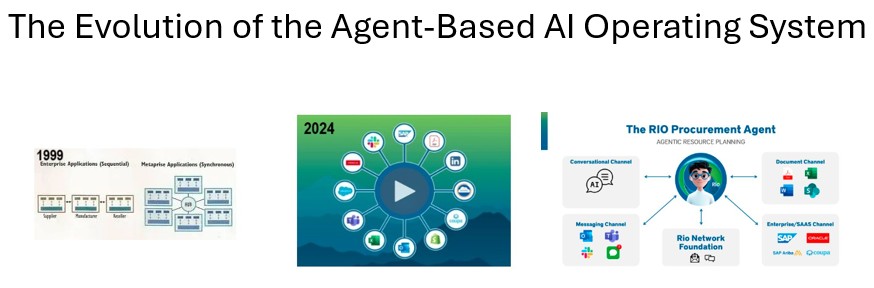
ConvergentIS’s Rio, launched in October 2024 as an AI-powered “digital team member” for procurement, directly tackles the 2007 pain points through its design as an intuitive, SAP-integrated intake and orchestration tool. By 2025, Rio has seen updates (e.g., featured in a February 2025 ProcureTech demo) emphasizing real-time efficiency, compliance, and user-centric automation, with reported gains like 4.2x cross-system efficiency and 28% improved SLA compliance. It automates requests from email, chat, or forms, creates SAP requisitions, and embeds policies into workflows, allowing procurement teams to focus on strategy over manual tasks. Here’s how it addresses each point:
In 2025, Rio positions procurement as agile and people-driven, aligning with CPO priorities like AI adoption and resilience, ultimately debunking the 2007 myths through practical, feedback-informed innovation.
TODAY’S TAKEAWAY
Solution providers like ConvergentIS, Focal Point, AdaptOne, ApolloRise, PhysicsX, Vultr, and Vellum aren’t being covered by most mainstream analyst firms. In the few times they, their presence is reduced to a “face-in-the-crowd” logo solution map – usually using outdated taxonomies.
As you read the above, ask yourself this one question: with 23 years under their belt, isn’t it possible that ConvergentIS (and solution providers like them) may have figured out a few things that can have an immediate impact and return for your procurement team?
In short, look at the company, overcome institutional inertia and start making the Metaprise, Agent-based, Strand Commonality models work for you!
There are no excuses not to.
30
BONUS COVERAGE – WHAT’S WRONG WITH THIS POLL RESULT!

Here is an excerpt of from the upcoming Procurement Insights post:The Angry Poll.
“Mainstream analyst firms like Gartner and Forrester, along with consultants, often miss or under-recognize smaller or innovative solution providers due to a combination of structural, financial, and methodological factors. The attached poll image—from a August 15, 2025, Procurement Insights blog post—illustrates this disparity vividly: while 100% of respondents recognize Capgemini/WNS (a major consulting and business process outsourcing entity), 0% have heard of innovative providers like Vultr (a cloud infrastructure platform), Vellum (an AI development platform), and PhysicsX (an AI-driven engineering simulation company). This isn’t unique to procurement or AI sectors; it’s a systemic issue across tech landscapes, where coverage skews toward established giants.”
Posted by piblogger
Categories: Commentary
Tags: AI, Artificial Intelligence, business, change management myth, change resistance, ConvergentIS, procuretech, RIO, Sarah L. Manley Robertson, Shaun Syvertsen, technology
Mobile Site | Full Site
Get a free blog at WordPress.com Theme: WordPress Mobile Edition by Alex King.