There is no secret formula for developing and implementing a successful ProcureTech strategy. The money spent pursuing complex strategies and following overly complicated charts is mindboggling.
Over the past 40 years, look at the almost incalculable amount of money needlessly spent, resulting in an unacceptably high rate of initiative failure.
ProcureTech Investments:
- Market Growth: The procurement software market was valued at $8.65 billion in 2024 and is projected to reach $16.38 billion by 2029, reflecting a CAGR of 13.6%. thebusinessresearchcompany.com
- Adoption Rates: A significant majority (83%) of Chief Procurement Officers have prioritized digitizing their procurement processes, underscoring the growing emphasis on ProcureTech solutions. procurementtactics.com
Then consider the ratio of success versus failure.
Digital Transformation Initiatives:
- High Failure Rates: Research indicates that approximately 70% of digital transformation efforts do not achieve their intended goals. mckinsey.com
- Significant Financial Losses: Globally, failed digital transformation programs have resulted in an estimated $2.3 trillion in wasted investments. newsroom.taylorandfrancisgroup.com
ProcureTech Implementations:
- Elevated Failure Rates: Reports suggest that the failure rate for procurement technology implementations can exceed 80%. sourcinginnovation.com
The following series of three article provide clear steps to lay the solid foundation to reverse the high ProcureTech initiative failure rate and significantly increase the rate of a successful implementation outcomes.
STEP 1 – What is the difference between a Metaprise and an orchestration and intake model in ProcureTech?
What is the difference between a Metaprise and an Orchestration and Intake model?
STEP 2 – What Is The Difference Between An Internal And External Metaprise And Why It Matters To Procurement
Why knowing the difference between an Internal and External Metaprise is critical to procurement’s success.
STEP 3 – What Is The Relationship Between Strand Commonality, The Metaprise And ProcureTech Success?
Why does ProcureTech need to understand the link between Strand Commonality and the Metaprise Models?
ABOUT STRAND COMMONALITY
Jon Hansen developed the theory of “strand commonality” in the late 1990s. This theory posits that seemingly unrelated data streams possess interconnected attributes, which, when identified, can collectively influence desired outcomes. Hansen’s research in this area was supported by the Canadian government’s Scientific Research and Experimental Development (SR&ED) program. There is no evidence to suggest that other researchers have developed or contributed to the “strand commonality” theory as defined by Hansen. – ChatGPT
30
ADDITIONAL RESOURCES
First Procurement Insights article on the the Metaprise – Dangerous Supply Chain Myths (Part 3) (June 2nd, 2007)
First Procurement Insights article on Strand Commonality – Optimization Modeling and the Modern Supply Chain (A PI Q and A) (March 18th, 2008)
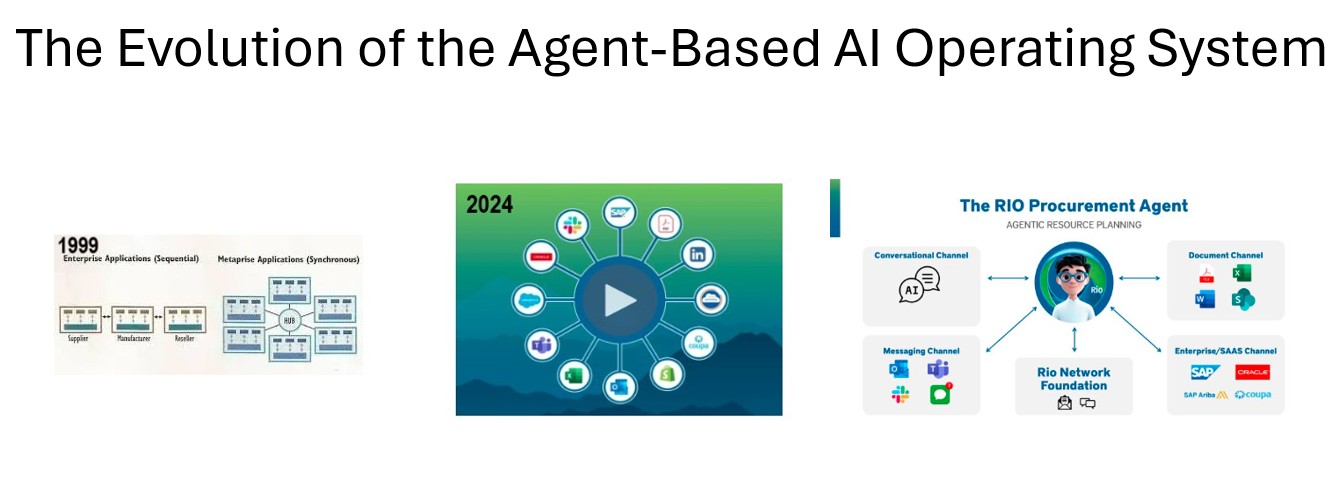
First Procurement Insights article on the high rate of ProcureTech initiative failures and case example of the agent-based model – Yes Virginia! There is more to e-procurement than software! (Part 1) (September 12th, 2007)
First Procurement Insights article on the Agent-Based Model – Is There a Poor “Herbie” Anywhere in the Oracle SCM Area? (April 1st, 2008)


 Procurement Insights
Caleb Cheruiyot
February 22, 2025
Wonderful ♥️
piblogger
February 22, 2025
Thank you for taking the time to comment, Caleb.