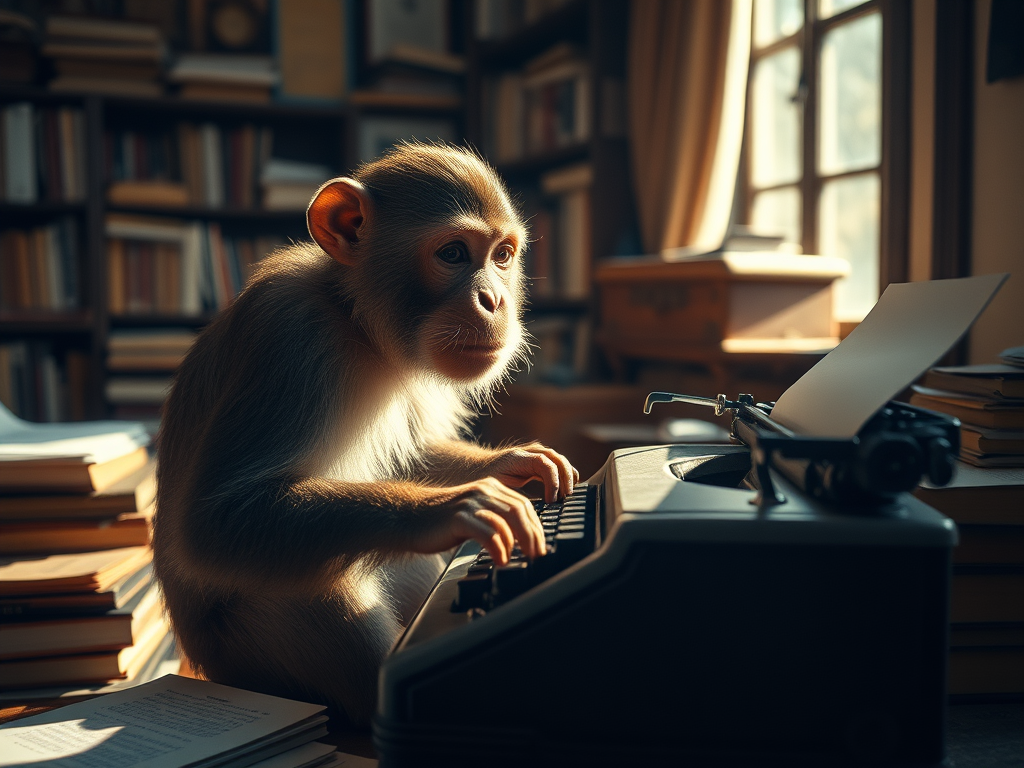
“If you let a monkey hit the keys of a typewriter at random an infinite amount of times, eventually the monkey will type the entire works of Shakespeare.” – The Infinite Monkey Theorem.
Over the past couple of weeks, I have been experimenting with ChatGPT.
You should know that I view ChatGPT as a more advanced, real-time version of my old Funk & Wagnalls and Google. In short, while amazingly fast, it is a resource that still requires my discretionary or critical thinking.
The Experiment Parameters
Ask ten people to ask ChatGPT the same question twice – once with and once without a question mark. Then, compare answers.
Why Do The Experiment?
In theory, there should be consistency in the answers; otherwise, which answers are right and which are wrong? This question is at the heart of the “Black Box” fear that many executives have – especially finance regarding how AI comes up with the right answer.
The bigger question is which solution provider’s unique self-learning algorithms within the AI framework will produce the optimal answers. In short, what is the logic behind the algorithms’ architecture? How reliable are they at sifting through the endless sea of information to deliver the best answer for you rather than providing generalizations? At what point does human intervention in critical thinking and problem-solving come into play?
My short paper, “Algorithm Architecture and Critical Thinking in Procurement and Supply Chain,” will be published in October.
In the meantime, let me know the results of your experiment.
30


 Procurement Insights
piblogger
September 25, 2024
Please share the results when you can.